
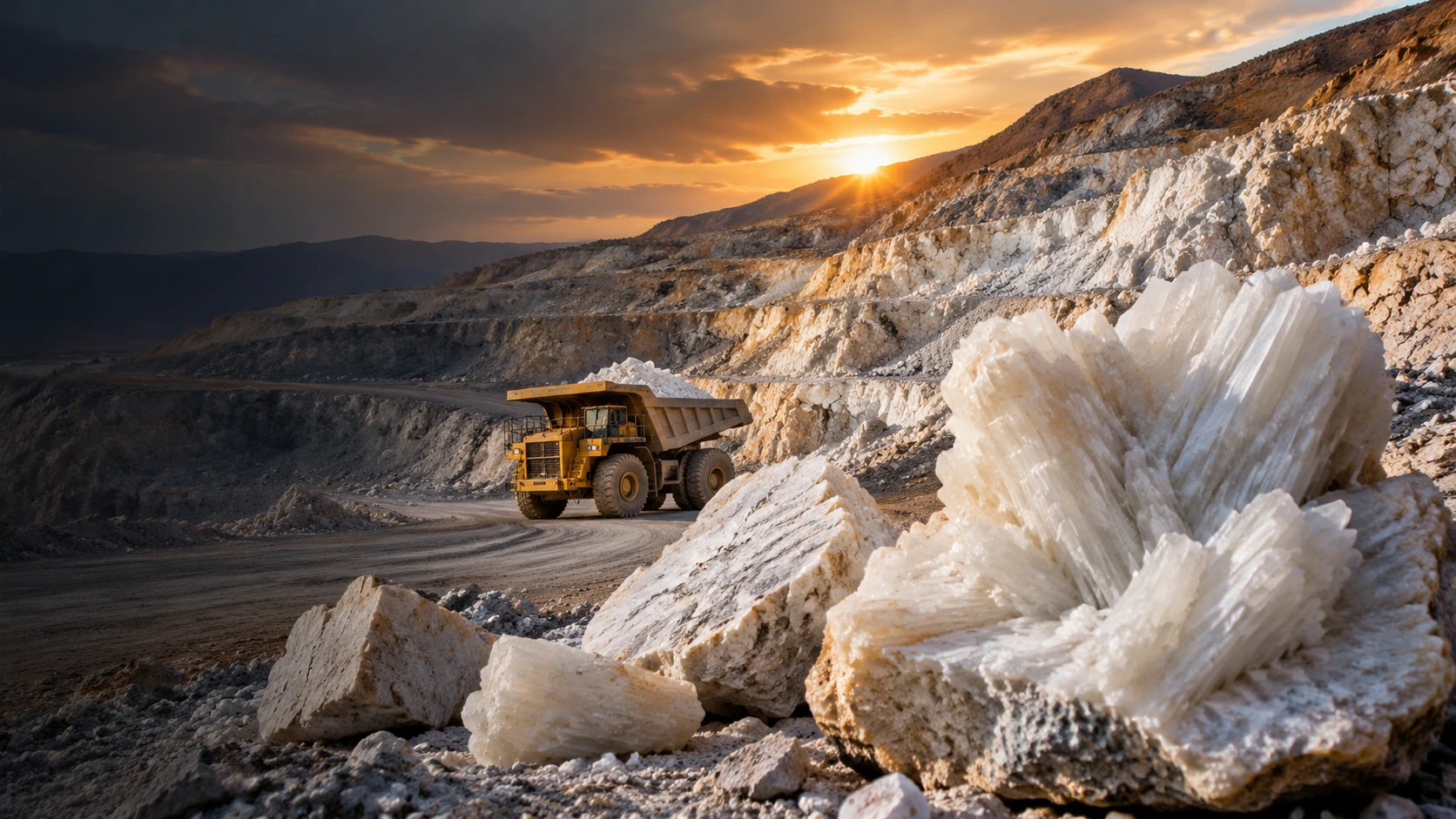
INDUSTRIAL MINERALS / IRANIAN MINERAL RESOURCES
Baryte (Barite) from Iran
A High-Density Mineral for Demanding Industrial Applications
Baryte, also known as barite, is a naturally occurring barium sulfate mineral (BaSO₄). Its high density and chemical resistance make it valuable in oil and gas drilling, paints, plastics, glass, ceramics and other industrial applications.
01 / MINERAL OVERVIEW
What Is Baryte?
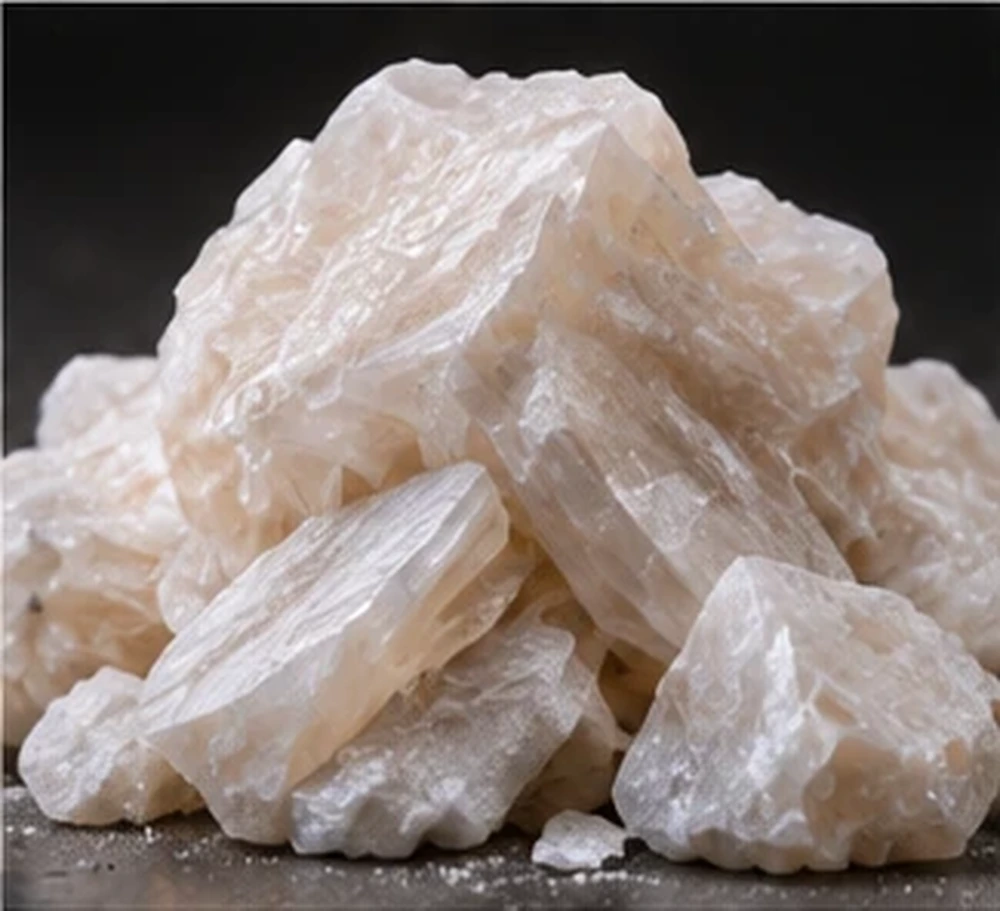
Baryte (or barite) is a naturally occurring mineral primarily composed of barium sulfate (BaSO₄). Its name comes from the Greek word barys, meaning “heavy,” a reference to its notably high density compared with many other minerals.
Natural baryte may occur in white, colourless, grey, yellow and blue hues. Its high density and chemical resistance underpin its importance as an industrial mineral, particularly as a weighting material in drilling fluids and as a functional filler in manufacturing.
02 / KEY CHARACTERISTICS
Properties That Make Baryte Valuable
Baryte is selected for applications where density, chemical behaviour and the physical characteristics of the mineral are important to the end-use process.
High Density
Its relatively high specific gravity makes baryte useful as a weighting material in oil and gas drilling fluids.
Chemical Resistance
Baryte is resistant to many chemical conditions, supporting its use as a functional filler in industrial formulations.
Natural Colour Range
Common colours include white, colourless, grey, yellow and blue, depending on mineral composition and associated impurities.
Versatile Filler
Ground baryte can be used in paints, plastics, rubber and other products where density and material performance matter.
03 / PRODUCT FORMS
Baryte for Different Industrial Requirements
Depending on the deposit, processing route and buyer requirements, baryte may be prepared in different physical forms and particle-size ranges.
Run-of-Mine & Lump Baryte
Natural material supplied in lump form, subject to sorting, preparation and the agreed size specification.
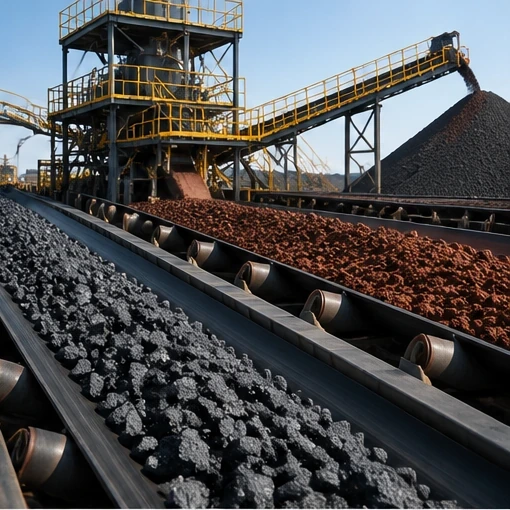
Crushed & Sized Baryte
Crushed and screened material can be prepared to agreed size ranges for industrial handling and downstream processing.
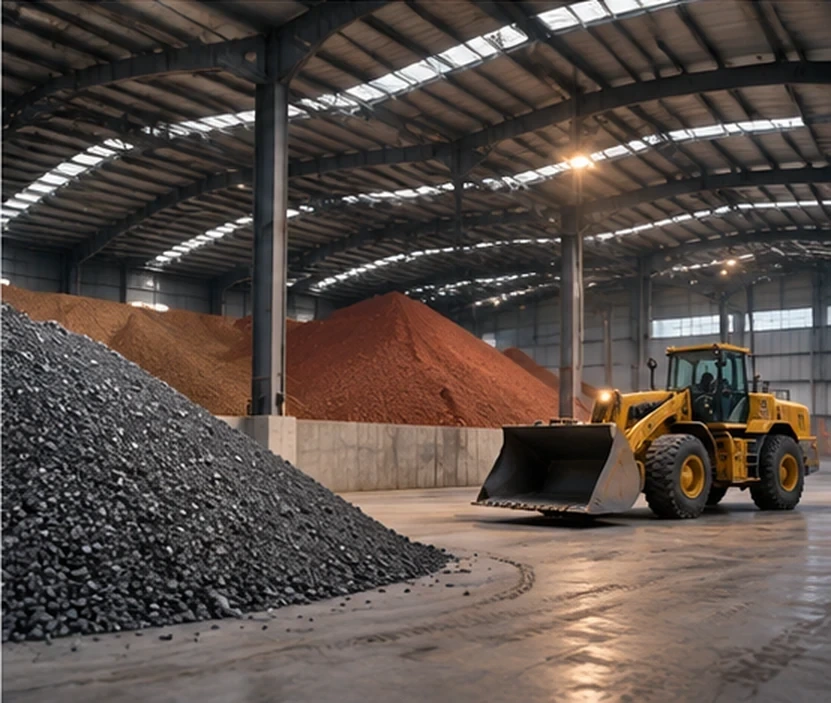
Ground & Powdered Baryte
Ground baryte is used as a filler in selected formulations. Fineness and product requirements depend on the intended application.

04 / QUALITY & SPECIFICATION
What Should Be Checked Before Purchase?
Baryte specifications should be matched to the buyer’s end-use requirements. A drilling-fluid customer, for example, may evaluate different parameters from a paint, plastic or glass manufacturer.
05 / INDUSTRIAL APPLICATIONS
Where Is Baryte Used?
Baryte’s density and chemical characteristics support a diverse range of industrial applications, from drilling operations to manufactured products.
Oil & Gas Drilling
Baryte is used as a weighting material in drilling fluids to help control well pressure and reduce the risk of well-control incidents during drilling.
Drilling mud · Well controlPaints & Plastics
Used as a functional filler in paints and plastics, baryte can contribute density and selected physical properties to formulations.
Filler · Coatings · PlasticsGlassmaking & Ceramics
Baryte is used as an additive in some glass and ceramic formulations to influence product characteristics and quality.
Glass · Ceramic productsRubber Manufacturing
As a mineral filler, baryte can increase the weight and density of rubber products and contribute to selected performance requirements.
Rubber · Industrial componentsRadiology & Imaging
Pharmaceutical-grade barium sulfate is used as a contrast medium in selected digestive-tract imaging procedures. This is a specialized medical product, not raw industrial baryte.
Medical-grade BaSO₄ · ImagingSpecialty Formulations
Baryte’s density and chemical resistance make it relevant to other industrial formulations where a suitable mineral filler is required.
Industrial fillers · Specialty products06 / MINING & PROCESSING
From Baryte Deposit to Industrial Product
Mining and preparation routes depend on deposit geology, mineral association, the required product grade and the target application.
Open-Pit Mining
Surface extraction may be used where baryte-bearing deposits are accessible through open workings and benches.
Underground Mining
Underground methods may be used for deeper deposits, with the extraction plan selected according to ore-body geometry and ground conditions.
Extraction, Size Reduction & Classification
Processing is selected to achieve the required size distribution and product characteristics for the end user.
Quality Review & Dispatch
Product handling and dispatch should follow the agreed specification, packaging format and shipment requirements.
This is a general industry process overview, not a claim that IRMinEX owns or operates a specific baryte mine or processing facility.
07 / IRAN'S BARYTE RESOURCES
Mineral Resources Across Several Provinces
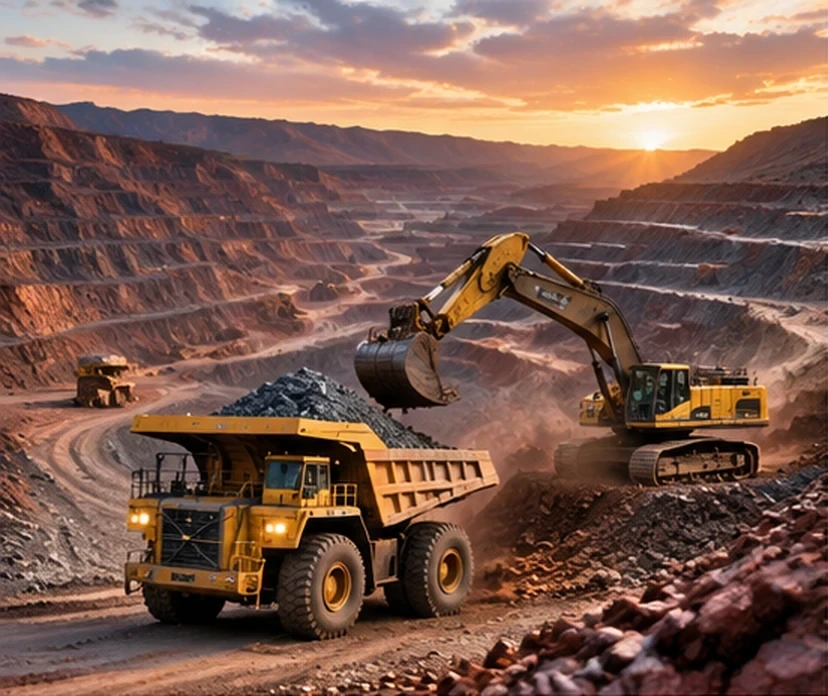
The original IRMinEX article identifies baryte resources and mining activity in Kerman, Hormozgan, Khorasan, Semnan and Hamadan. The distribution of these resources supports domestic industrial use and creates potential for supply to regional markets.
These are regional references from the original article. They do not establish current mine operating status, reserve estimates, output, ownership or IRMinEX’s direct access to a specific deposit.
RESOURCE & SUPPLY CONTEXT
Domestic Demand and Export Potential
The legacy article describes Iran as substantially self-sufficient in baryte production, with domestic demand led by oil and gas drilling. It also identifies the medical, glass, rubber and paint industries as domestic users.
08 / DOMESTIC MARKET
Supporting Key Industries in Iran
The legacy IRMinEX article describes a domestic market shaped by drilling activity and a broader range of manufacturing uses.
Oil & Gas Drilling
Drilling operations are identified as a major source of domestic baryte demand, particularly for weighting drilling muds.
Paint, Glass & Rubber
The article also identifies paint, glass and rubber manufacturing among the domestic industries using baryte.
Medical & Other Applications
Medical imaging and other industrial applications form part of the broader use profile described in the source article.
09 / EXPORT MARKETS
Regional Trade and Export Opportunities
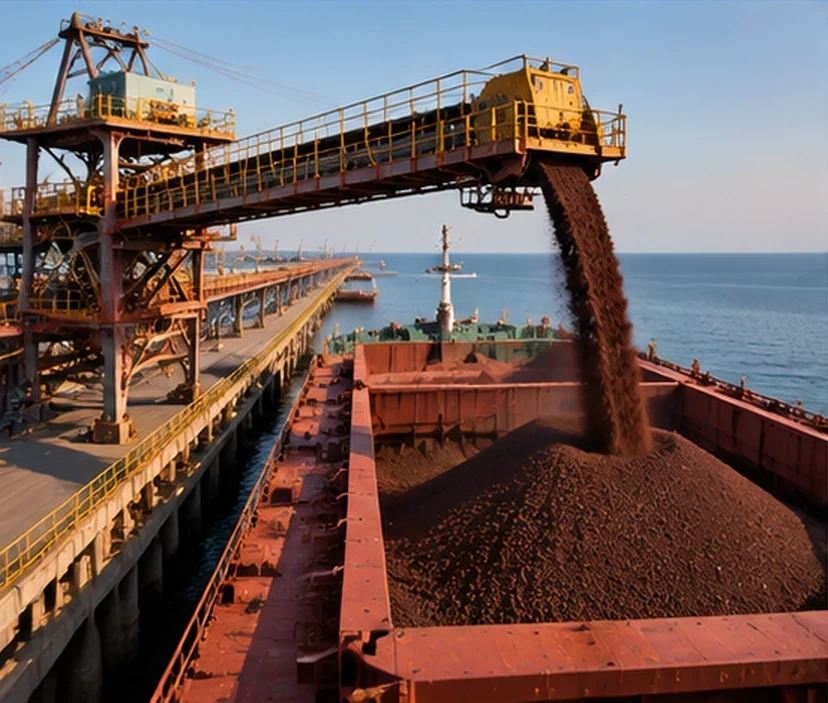
The legacy IRMinEX article identifies Iraq, Turkey and the United Arab Emirates among the key export markets for Iranian baryte, alongside other Middle Eastern destinations.
10 / INDUSTRY OUTLOOK
Challenges and Opportunities in the Baryte Sector
The original IRMinEX article identifies several factors that may influence the development of Iran’s baryte extraction and export industry.
Areas Requiring Attention
- Aging extraction technologies
- Need for investment in infrastructure and exploration
- Transportation and export constraints
Potential Areas for Growth
- Investment in modern extraction and processing technologies
- Greater collaboration with international companies
- Expansion of export capacity and market access
11 / BUYER CHECKLIST
Information to Include in a Baryte Enquiry
Clear technical and commercial requirements help determine whether a proposed baryte material is suitable for the intended use.
BARYTE / FAQ
Frequently Asked Questions
Answers to common questions about baryte, its industrial applications and Iranian resources.
What is baryte?
Baryte, also known as barite, is a naturally occurring mineral primarily composed of barium sulfate (BaSO₄). It is known for its high density and chemical resistance.
What is baryte used for in oil and gas drilling?
Baryte is used as a weighting material in drilling fluids. Its density helps control well pressure during drilling operations.
Which industries use baryte?
Applications described in the original IRMinEX article include oil and gas drilling, medical imaging, paints, plastics, glass, ceramics and rubber manufacturing.
Where are baryte resources found in Iran?
The legacy IRMinEX article identifies Kerman, Hormozgan, Khorasan, Semnan and Hamadan as provinces with baryte mines or resources.
Which countries import Iranian baryte?
The original article names Iraq, Turkey, the United Arab Emirates and other Middle Eastern countries as export markets. Current destinations and trade conditions should be reconfirmed.
What product grades and particle sizes are available?
The legacy article does not publish current grades, size ranges or product availability. These details should be requested and confirmed for the specific material and end-use application.
Is industrial baryte the same as medical barium sulfate?
No. Medical imaging uses specially processed pharmaceutical-grade barium sulfate under medical controls. Raw industrial baryte is not a medical contrast product.
IRMINEX / BARYTE ENQUIRY
Discuss Your Baryte Requirements
Contact IRMinEX to discuss the intended application, technical specifications, product form, quantity and export destination for your baryte enquiry.