
IRMINEX / MINERAL QUALITY
Mineral Impurities & Deleterious Elements in Export Materials
Understand the chemical components that influence mineral grade, processing performance and buyer specifications — from sulphur and phosphorus to silica, arsenic and other product-specific constituents.
QUALITY STARTS WITH COMPOSITION
Why Mineral Impurities Matter to Industrial Buyers
Mineral products are evaluated not only by their main valuable component, but also by the accompanying substances that influence processing, recovery, product quality and commercial acceptance.
Depending on the commodity and its intended use, sulphur, phosphorus, silica, arsenic, lead, cobalt, iron or calcium may be controlled constituents. A component that is undesirable in one product can be useful or expected in another. Its significance must therefore be judged against the relevant product specification.
For buyers and suppliers, the practical question is not whether a mineral is universally “impurity-free”; it is whether a representative sample of the offered lot meets the agreed chemical and physical limits.

UNDERSTANDING THE ASSAY
Key Impurities and Controlled Components
The elements and compounds below can be important in mineral trading. Their acceptable limits vary by commodity, processing route, buyer requirements and contract.
Sulphur
May affect metallurgical performance, emissions management and downstream processing. It is commonly specified for iron ore and several concentrates.
Phosphorus
Can influence steelmaking properties and may be subject to strict limits in iron ore products intended for particular steelmaking routes.
Silica
A major gangue component in many ores. Its level can affect beneficiation requirements, slag volume and process economics.
Arsenic
Can be a critical penalty or environmental-control element in selected metal ores and concentrates, depending on the smelting route and regulations.
Lead
May be a target metal in lead-bearing ores, but can be an unwanted constituent in other concentrates. Context and specification determine its role.
Iron
Often the principal valuable component in iron ore, but may be a controlled accompanying constituent in copper, lead, zinc or industrial minerals.
Calcium & Other Components
Calcium, cobalt and other constituents can be useful, neutral or undesirable depending on mineralogy, product type and the buyer’s process.
Technical note: silica (SiO₂) is a compound rather than a chemical element. “Impurity” and “deleterious element” are specification-dependent terms, not universal labels.
COMMODITY-SPECIFIC REVIEW
What Buyers Commonly Check in Different Mineral Products
Each mineral requires its own analytical profile. The relevant limits should be stated in the purchase specification and verified against a representative lot sample.
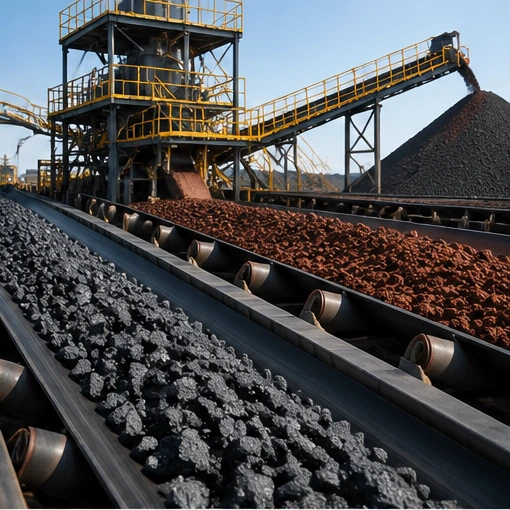
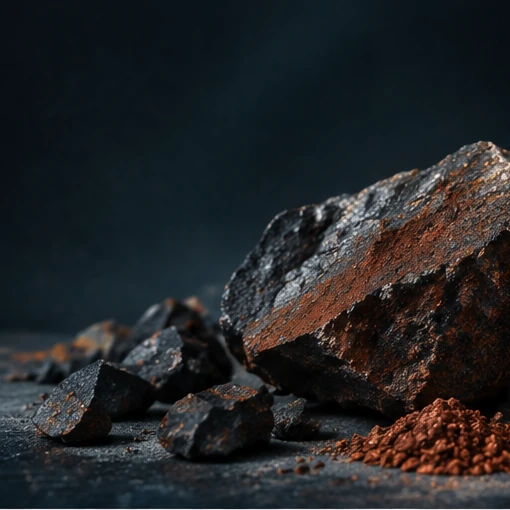
Iron Content, Silica, Alumina, Sulphur & Phosphorus
Iron ore buyers commonly review Fe grade alongside silica, alumina, sulphur, phosphorus, moisture and particle-size distribution. The balance affects sintering or pelletizing behaviour and the economics of the steelmaking route.
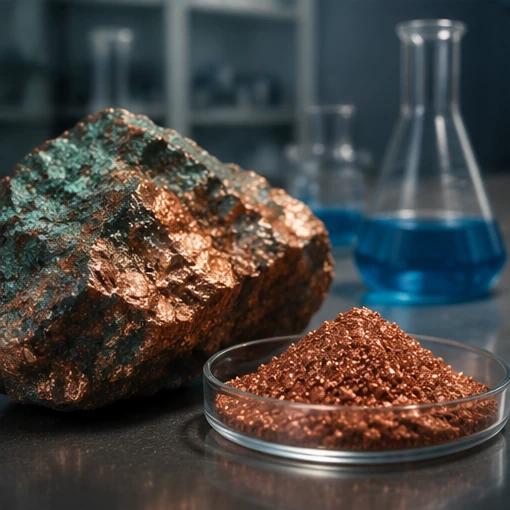
Copper Grade, Arsenic, Lead, Iron & Sulphur
For copper products, the assay may include Cu grade, sulphur, iron and penalty elements such as arsenic or lead. Moisture and concentrate characteristics are also relevant to transport, handling and smelter acceptance.
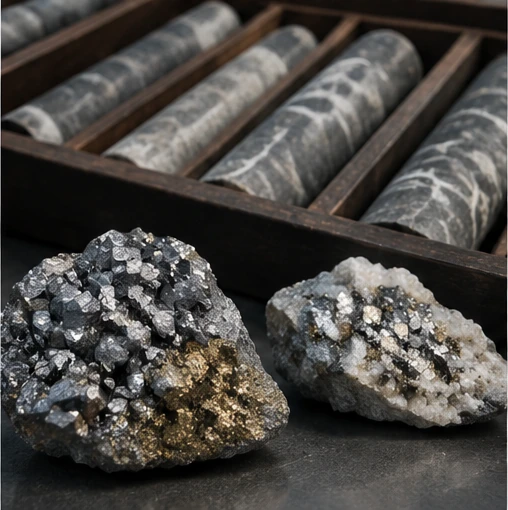
Target Metal Grade and Associated Elements
Lead and zinc concentrates are assessed for their principal metal content and associated components. Depending on the product and destination process, iron, silica, sulphur, cadmium and arsenic may also require attention.
The previous IRMinEX page referred to Chador Malu and Gol Gohar iron ore, copper deposits and lead-zinc resources in Zanjan as examples. Those references are retained as historical page context only; they do not establish the current assay or guaranteed quality of any mine, supplier or shipment.
COMMERCIAL & PROCESSING EFFECTS
How Unwanted Components Can Affect Value
The commercial impact depends on the mineral, the concentration of the component and the buyer’s process. A single assay result can influence more than the headline grade.
Processing Cost
Higher gangue or penalty-element levels may require additional beneficiation, blending, treatment or downstream controls.
Product Performance
Chemical composition can affect the behaviour of feed material in steelmaking, smelting, refining or other industrial processes.
Contract Acceptance
Buyers may define maximum limits, adjustment formulas or rejection conditions for specific components in the sales contract.
Logistics & Handling
Moisture, particle size and physical properties can influence storage, loading, transport safety and the handling plan.
FROM SAMPLE TO SPECIFICATION
How Mineral Quality Should Be Verified
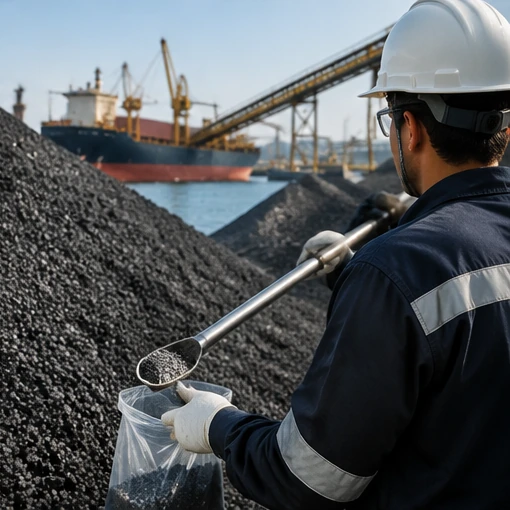
A reliable assay starts with a representative sample. Laboratory precision cannot compensate for a sample that does not properly represent the lot being traded.
Agree the product specification
Define the target grade, controlled components, moisture, size range, test methods and acceptance limits before shipment.
Plan representative sampling
Set out the sampling method, increments, lot definition, sample preparation and chain of custody.
Obtain laboratory results
Use suitable analytical methods and a competent laboratory for the commodity and the elements being measured.
Compare results with contract limits
Review the certificate of analysis, test methods, uncertainty and any agreed umpire or dispute procedure.
For iron ore, ISO 3082:2017 describes sampling and sample-preparation principles for determining chemical composition, moisture, size distribution and other properties. The applicable standard and edition should be confirmed for each commodity and contract.
PROCESSING OPTIONS
Can Mineral Impurities Be Reduced?
Sometimes. The appropriate treatment depends on mineralogy, particle size, liberation, chemistry and the required product specification. No single process is suitable for every ore.
Screening & Classification
Separates material by particle size and can support downstream processing where the valuable mineral and gangue respond differently.
Magnetic Separation
Can concentrate or remove selected magnetic minerals when the ore’s mineralogy and liberation characteristics make the separation suitable.
Flotation
Uses differences in surface properties to separate selected minerals. Reagent selection and process conditions are ore-specific.
Washing & Beneficiation
May remove certain fine or surface-associated materials and improve product consistency, subject to water, waste and recovery considerations.
DOCUMENTATION FOR BUYERS
What to Request Before Confirming a Mineral Purchase
Clear technical documentation helps both parties understand whether the offered material matches the intended industrial use and the commercial contract.
Document requirements should be agreed before shipment and may vary by commodity, destination, inspection arrangement and Incoterms® rule.
IRANIAN MINERAL SOURCING
Assess the Actual Lot — Not Just the Mine Name
Iran’s mineral sector includes iron ore, copper, lead and zinc resources. The earlier IRMinEX content highlighted examples from central Iran and Zanjan, but chemical composition can vary between deposits, benches, production periods and individual lots.
For international buyers, the most useful basis for comparison is a current assay tied to a clearly identified lot, together with agreed sampling and inspection arrangements.
Explore Iran’s mineral extraction landscape ↗MINERAL QUALITY FAQ
Frequently Asked Questions
Practical answers to common questions about impurities and export specifications.
Are all impurities harmful in every mineral?
No. The role of a component depends on the commodity and its intended use. Iron is valuable in iron ore but may be controlled in another product. A buyer’s specification determines which components are beneficial, neutral or undesirable.
Which impurities are commonly checked in iron ore?
Common parameters include silica, alumina, sulphur, phosphorus and moisture, alongside iron grade and particle-size distribution. The exact list and limits depend on the buyer and processing route.
Why is arsenic important in copper concentrates?
Arsenic can be a penalty or controlled element for some smelters and destinations. Its commercial impact depends on concentration, the processing route, regulations and contract terms.
Can a mine name guarantee the quality of a shipment?
No. Composition may vary within a deposit and between lots. A current representative sample and agreed assay procedure are needed to verify the material offered.
What is the difference between an assay and a certificate of analysis?
An assay is the analytical result for a sample. A certificate of analysis is a formal document reporting specified test results and should identify the product or lot, methods and relevant sample details.
Does ISO 3082 apply to every mineral?
No. ISO 3082:2017 is specifically for iron ores, including natural or processed iron ores such as concentrates and agglomerates. Other commodities may require different product-specific standards and methods.
IRMINEX / MINERAL ENQUIRY
Have a Mineral Specification to Review?
Share the product, target grade, required impurity limits, quantity and destination. The IRMinEX team can review your enquiry and discuss the product information needed for the next step.